
 English
 Español
Mensajes recientes
Sobre nosotros
-
Nuestra empresa ofrece productos para el cuidado del automóvil.Ofrecemos OEM,ODM servicios
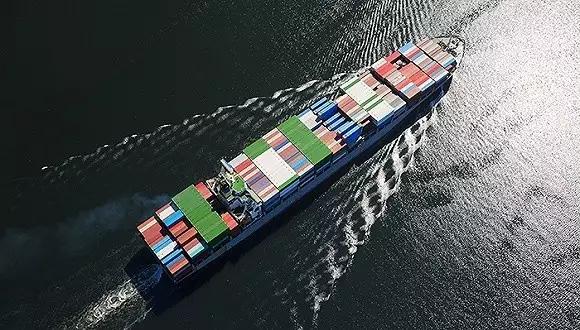
When asked about the market in July and August, many practitioners, including foreign trade enterprises, freight forwarders and shipping companies, mentioned a word simultaneously -- the explosion of the cabin.The so-called "burst" refers to the actual number of Spaces booked in a certain port for a ship's voyage, exceeding the scheduled quota of space, or the actual weight of the cargo booked exceeds the scheduled weight limit.
"For example, the actual shipping space is 300, but the shipping company releases 400. When it comes to ship allocation, some goods cannot be loaded, so they either stay in the port for the next voyage, or transfer to another port to be transported on another voyage.""Consolidated shipments to the US in the past two months have often exploded, and my volume has more than doubled," explained a freight broker.You used to be able to book space a week in advance, but now you have to book it two to three weeks in advance."
In short, there are too many goods to ship.Data released by the ports of Shanghai and Ningbo show that the throughput of containers at the ports has surged since June.
Unbalance between supply and demand will inevitably lead to high freight rates
According to the Shanghai Export Container Freight Index released by the Shanghai Shipping Exchange on September 4, the comprehensive index of the current period was 1320.80 points, up 57.54 points (up 4.6%) from 1263.26 points in the previous period (August 28).Compared with the low point of 855.34 in April in the first half of this year, it rose 465.46 points, an increase of more than 50%.
US west (basic port), US east (basic port) and other routes continue to strengthen, promote the overall freight price index higher.In the first half of this year, the average rate for a 40-foot container to the east and west was $1,749 /FEU and $2,813 /FEU, respectively, up 8.6 per cent and 3.9 per cent, respectively, compared with the same period last year.
Industry regulation continued high freight rates
"In the past few years, three major alliances were born in the industry, which is the basic factor for the rate increase.The alliance can co-ordinate capacity and have better control over the delivery of capacity, so it can do better on the supply side of the market.""The market is not good this year [in the first half] and the industry is aware that if freight rates are not guaranteed, they will suffer heavy losses, so the main strategy is to keep capacity low and maintain a high price so that they can survive," Han Ning, Delulli's China director, told the Shanghai Securities News.
Since 2017, 13 container shipping companies have successively established 2M (Maersk, Mediterranean Shipping), Ocean Alliance (CAFI, CAFI, Evergreen, etc.) and The Alliance (Yangming Shipping, One, Hyundai Merchant Shipping, etc.).Among them, seven companies, including Maersk, Mediterranean Shipping and CCOS, together account for 75.5% of the global market, with the industry highly concentrated and stable.
Are the high rates sustainable?
Although the demand is strong, but many insiders believe that high freight rates are difficult to sustain.
"In the long term, the high freight rates are certainly not sustainable, and eventually people will return to a healthier and more stable market."Hanning believes that the continued high rates will lead to various national or regional authorities to intervene and investigate, so as to curb high rates.
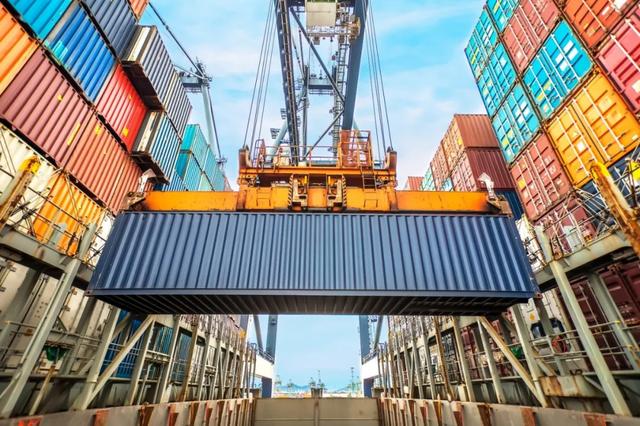
In mid-August, the water transportation bureau of the Ministry of Transport sent letters of inquiry to six large freight companies to investigate whether there is a monopoly between supply and demand.In this regard, the company said that there is no monopoly of supply and demand, freight rate rise is a short-term increase in shipments resulting in supply and demand imbalance.
Coincidentally.The U.S. Federal Maritime Commission also began investigating shipping companies on Aug. 28 and is considering ways to monitor shifts and other measures.
The foregoing freight broker believes that the third quarter is the traditional peak season for shipping, and the price rise is a common phenomenon."The first half of the year is the slow season, and to South America, for example, the cheapest is a few hundred dollars. Now it's up to 4,000 dollars for a high case.After October, however, there should be relief."
"In fact, the essence of the crash boom is a change in the relationship between supply and demand. Now there is too much capacity and the boom is only temporary.""There is no basis for high freight rates to be sustained in the long term without fundamental changes to the current situation of excess capacity in the industry," said a CCOC staff member.
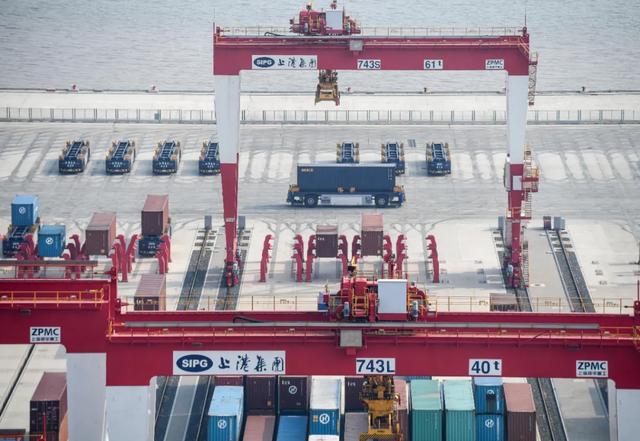
Data from Alphaliner, a third-party firm, showed that at the beginning of June, 521 container ships with 2.61 million TEU were idle globally, up from 1.52 million TEU in 2008 after the global economic crisis.As demand unwinds, previously idle capacity is gradually coming onto the market.
According to Delury's monthly report, the proportion of idle container capacity in the world has fallen from 9.8 per cent in June to 7.4 per cent in July.This means that 500,000 TEU capacity has been brought back to market in just one month.
Sustaining capacity, however, will not be easy.In addition to the need for a long-term steady flow of cargo, recruiting a basic number of seafarers has become a challenge.
"If the freight rate is high, eventually there will be a shipping company to hold, cut the market share sprint, this time the freight rate will be down.""Until then, companies will remain quiet and enjoy the market dividend of less capacity," Hanning concluded.